
This October, we're taking part in Pastor Appreciation Month by highlighting and celebrating pastors across the country, telling the story of God's work in and through them.
Paul Kim is the senior pastor at Redeemer Presbyterian Church (PCA) in San Diego, California, where he has served since 2013. Kim graduated from Westminster Seminary California before helping plant Harbor Church North County, which became Redeemer Encinitas after merging with North Coast Presbyterian Church.
Kim waded through an uncertain sense of identity as the child of South Korean immigrants growing up in the pronounced Western context of Southern California. But God was molding the young Kim, as he tells it now, through ordinary means of faithful parents, friendship, and mentors in the Church.
He was drawn to a new understanding of what it meant to live as a follower of Jesus during his college years at UC Berkeley, where he felt a call to pastoral ministry. Kim followed it, working as an ambassador of the kingdom of Heaven on the West Coast ever since.
The following is a transcript of a conversation between K-LOVE's Ben Milam and Pastor Paul Kim of Redeemer Encinitas in San Diego, California.
October is Pastor Appreciation Month, and here in the K-LOVE newsroom, we're taking that as an opportunity to highlight a few of the pastors that serve their congregations in what I would call one of the most unique jobs out there.
I think a nice encapsulation of the challenge it is to be a pastor is when it was said that pastors, "feel responsible for everything and control nothing." So, we get a chance to take a peek behind the pulpit, so to speak.
What is it like to be a pastor? We're going to answer that question. Why are you a pastor? How can the body of Christ serve and support pastors better?
This is K-LOVE's God Stories. My guest today is Paul Kim, the senior pastor at Redeemer Presbyterian Church Encinitas in San Diego, California.
I have to give a quick shoutout here to Andy Jones of byFaith, a great online magazine that I've enjoyed reading personally over the last few years. Andy did a story on Redeemer Encinitas, which is how I had the idea to reach out to Paul. And it was an excellent story.
So, Paul, welcome. Thanks for being here.
Thank you so much for having me.
First off, Paul, I think you have kind of a unique background: born in Hawaii, raised on the West Coast in the San Francisco Bay Area. From what I read, it sounds like you led a very West Coast life, so to speak, in your formative years. You were a skateboarder, DJ, played drums, and sang in the school choir. Overall, kind of sounds like you were just a cool California dude. So what was it like growing up where you grew up, and also what was your relationship with and understanding of faith in those years of childhood and growing up on the West Coast?
Well, let me start with my parents are devout Christians. So just growing up, I think that made a huge impact in my life, even though my junior high and high school years, and to some degree my first year in college, I was kind of like the prodigal son or just really wrestling with where I was in my faith.
But I love to tell the story about my parents. They were immigrants from South Korea, came from there to Hawaii, and then we moved to the Bay Area. They struggled economically, but church and faith were a huge part of it. And I grew up in the Korean church, and that's something that's unique to my story that I had to wrestle with even growing up, which is that although I'm Korean-American, I can't speak Korean very well. And then most of my friends growing up were not Korean American.
So just trying to navigate my own sense of identity culturally and ethnically while growing up. So I say that, but for instance, my dad is one of my heroes.
About 10 years ago — he always has a Bible with him — and I love to share the story and brag about him. He said to me one day, "Hey, Paul, are you reading the Bible?" I said, "Yeah, Dad, I am. I'm a pastor. I'm reading the Bible." He's like, "Good." And he said, "Do you know how many times I read the Bible?" "I don't know, Dad." "I read the Bible once a month, the entire Bible, once a month."
And not in a bragging way, but he is one of the most godly, humble people I've ever met, the way he loves and even now serves my mom, who's in advanced dementia. So I say that to go, I saw the reality of the gospel in my parents.
That being said, I grew up in the Bay Area, and all those things that you shared were part of my story, or at least I tried to come across as cool. Two interesting, I guess, maybe somewhat claim-to-fame stories are from my junior high and high school growing up: I was into skateboarding, and one of my buddies that we used to skateboard together, we were on the tennis team together, was Eric Dane. So he's an actor who just recently passed away from ALS.
So that was an interesting thing of just growing up and having that space there with him. And then when I went to college at Berkeley, my freshman year, I'm walking into the dorm, and as I'm walking in, there's all this talk and chatter. "Oh my goodness. Oh my goodness, you can't believe it." From the movie Goonies, this is dating myself. "Chunk is here." Chunk, Jeff Cohen, from the movie Goonies is on this floor, and he was my roommate my freshman year at Berkeley.
So those are just some fun facts about just me growing up, but that did shape a lot of trying to find my identity. I knew too much about the gospel to be true. I saw it, I grew up in the church, yet I struggled with my own sense of identity.
And it wasn't until after my freshman year, well, during which I just really felt this existential emptiness. And I went to UC Berkeley, and it's such a black-and-white place, and it really pressed me for what do I believe? And I think it came to that time when I was feeling so empty, and I'm trying to straddle the fence and I was so miserable.
And I knew that there was too much about God and Jesus that was there, but I was trying to live in the world. And it came to a place where there was a very non-emotional moment.
This conviction came: Paul, if the gospel is true and if Jesus is Lord and Savior, my life ought to orbit around him. And I remember thinking my life is going to change. At that moment, just in terms of the conviction piece, everything — the trajectory of all my faith in Jesus, my life is yours.
And that led to a whole journey of ministry and so forth. But growing up, it was those dynamics of living on the West Coast, trying to find my place in it while still having this faith and feeling that wrestling tug, and God's grace, praise the Lord, won over.
What was it like coming to faith in a place like Berkeley? Obviously, ultimately it was the Holy Spirit, but what external influences did God use? Community? Was it conversations with your parents? Friends that were also believers? How did God use other things like that to draw you to himself?
Yeah, that's a great question. There were several things as I reflect on that time. I think on one honest level, in junior high and high school, I had this narrative of the kind of person I needed to be or wanted to be, and that was either going to be popular or how people perceived me a certain way. And I wrestled with it; I just didn't see Christians that seemed cool.
I was like, oh, if I'm going to be a follower of Jesus, that's what it is. And so it wasn't until I went to college that I met and saw other people who loved Jesus, but I guess from my frame of reference in my mind, I was like, they loved basketball. They were people that I felt like I could resonate with in terms of what in my mind I was thinking about.
So God was gracious to bring certain people into my life where I was like, whoa, you can love Jesus and not be like the world, but you can love Jesus and reflect that. So I think that was one part of it.
Two, by the grace of God, the story is I saw this gal. I was like, wow, she loves Jesus. I'm attracted to her, and she was going to a church that I went to the church for the wrong reasons. She's now my wife, so I can say this.
So I think that too was a journey of God's kind of grace and providence, where that was something that was my intent. And then God had a way of saying, I'm going to break in and show you who I really am. There was a piece of that that was significant.
And then someone gave me these white cassette tapes right around the end of my freshman year, sophomore year, and said, "Paul, you got to listen to this person, this preacher, he's really good." I had no idea who it was. And he said some guy named Tim Keller.
I think those different pieces began, just looking back, thinking about my own faith journey. So long story short, definitely the Holy Spirit, but working through just my own story of emptiness, that pressure moment at Berkeley, and all those different factors God and his grace brought into my life that formed me.
And then, as you said, eventually you transitioned towards this call to ministry. What does that feel like, and how did you think about that when you started to feel that pull to ministry?
After my freshman year, I started reading the Bible and just growing as a disciple and plugging into the church. So that was my journey to frame and to respond to that. I took a history class right around that time. I was not a history major. I thought I was going to go business econ, and I really liked it. And so I really had no idea where I wanted to go, but I was like, okay, I'm going to be a history major. I don't know what that means per se, but I know I like it.
I ended up being a history major in my senior year. I took kind of a mini-thesis undergrad class, and my focus was on the Great Awakening, and I had to read Jonathan Edwards, and he's an incredibly sharp guy, hard to understand, so I had to read him multiple times.
But that also began a journey of my thinking and shaping and reflecting. And even as I reflect on the story, those kinds of parts came together, and I was involved in the church as well. And at that time I was also dating Linda, who's now my wife.
As I was getting ready to graduate final semester, I felt the internal call to, I think, 'Lord, you might be calling me in the ministry,' a desire. So there was this internal call, and it came from Scripture. So I was reading Exodus and the story of Moses saying, Lord, I can't speak.
That really resonated with me, as I kind of thought, Lord, I feel like that's me. When you're calling Moses into Egypt, he's like, I can't speak; send someone else. I was like, I felt like that was me. And same with Jeremiah. And so Jeremiah was young, and I felt like that too.
And I felt like there's this internal sense of call there, and with that, an external call. So as I shared my dad, whom I really respect, as I shared that with him, he kind of smiled and said, "Yeah, I saw that one coming." And then my pastor too.
So my pastor in college, I shared with him and I had another mentor who was a pastor too. And as I just processed with them, they were like, "We really see the external call of this in your life right now, and you should go to seminary, so just pursue that call."
And then with Linda too, as we were dating and we were thinking about marriage, she had to navigate that through and process it. So long story short, at least for my story and what I would say to other people if they're asking about that, I think the internal and external call is pretty significant, and the internal is shaped by God's word and not just by desire, but coming from it. And then the external call of people seeing those gifts and saying, "Oh, we see that in you," and then the opportunities coming together.
So I think all those things kind of converged to my story of sensing the call to ministry.
This might be kind of hard to answer because I'm going to ask about 25-ish years of ministry here, but you got your seminary degree at Westminster Seminary in California and planted a church in 2001, which eventually became Redeemer. And Redeemer was officially formed in 2013 as Harbor Church, North County and North Coast Presbyterian Church joined together as one church community. And then this year, Redeemer planted a second location, which is part of plans for it to be its own separate congregation, Redeemer Scripps Ranch.
Looking back on your ministry, just hearing that quick summation from 2001 to that move in 2013, to now multiplying as a church in this past year, what stands out to you? What goes through your mind when you think about these last 25 years of ministry?
I think God always, well, from at least sharing for myself, the opportunities and the things that God brings into your life, and your calling is not random, but shaped by your story.
So I would say, as I shared with you earlier, Ben, about growing up and identity, and even I grew up in the Korean church, but I didn't understand Korean, so that was really hard. And then all my friends, for the most part, they weren't Korean; they were mostly white.
And so I felt this sense of, 'What do I do with that, and where's my identity?' And ultimately finding it in Jesus. But as we thought about church planting, one of the things that Linda and I had a heart for was: how can we invite our neighbors to be part of the church that we want to be part of? And I love the Korean American Church, the Korean church.
There are so many wonderful things about that too, that heritage and that story. For ourselves, we sensed like, 'God, I think you're calling us to be part of this multiethnic church.' That's part of our story. So as we were praying about that, we were looking at different opportunities, and we felt called to the West Coast in California because both my wife and I are from California. So long story short, I ended up visiting a professor at Westminster, California, as I was praying through all this and thinking about church planting.
And he said, "Hey, have you thought about San Diego?" There's a guy named Dick Kaufmann who is here with this movement with church planting called Harbor. And Dick Kaufmann, for those listening, he was the executive pastor with Tim Keller in the 90s. In my denomination, he was like Gandalf, like Yoda. He's the man.
So Linda and I, I remember we had a meal with Dick and Liz Kaufmann, and after that meal, Linda turned to me and said, "He's your mentor, and this vision for the city and what we are praying for, it seems like this is where we're called to be." I looked at her and said, "You're absolutely right."
So that's what moved us to San Diego. We weren't really thinking about this place per se, but it was the mentorship, and it was the vision of the city that gripped our hearts. So I would say, to start from there, that was Harbor, and Harbor was one church in multiple congregations. So that was my shaping story of then having been in a Korean church all my life, now to be in this church for the city with the gospel and no longer just being a Korean American church; it was just this whole new learning curve, but it was amazing.
And so the mentorship that I received from Dick and Liz Kaufman, but also the other peers with Harbor, was so formative. And so we planted with Harbor in 2003, and Harbor's model was one church, multiple locations for the sake of the gospel. And part of that vision for it was for the city and raising up leaders and discipleship. So that's a huge part of how Harbor was.
I guess to share, then in 2013, we were, after 10 years, thinking about: Is God wanting to continue to keep us in San Diego? And I went on a sabbatical and felt like, 'Okay, Lord, plant roots here.' At that point, we were meeting at a hotel and church in a box. And I said, 'Lord, if that's what it is, it's going to be what it is.' If there's a facility, it's expensive in Southern California, but there's something there.
And it so happened that there was another PCA church that had gone through transitions, and the pastor who happened to be there at that time used to be the executive pastor of Harbor. So that's the connection of like, okay, well, we worked 10 years together, and now he's there, so we have a relationship. That led to the conversation of, what do you think if two churches, in a day and age when churches split, if we came together?
And it was two PCA churches, but two different parts. The one that I was a part of had lots of young families. It was half Pan-Asian, half white. This other church was older, mostly all white. And so it was navigating that journey, and by the grace of God, in 2013, it was pretty much unanimous. We came together and became Redeemer.
And then the church grew rapidly. Then it was learning so much about leadership and structure and all of that. As we just shared, we planted our second location at Redeemer Scripps Ranch this past year. And the only reason I can say, well, why that was because of my story.
All of that coming together of Harbor and what stewardship looks like, and some of the things I was so privileged to learn, but also grow and say, "Here's what I think I'm learning from, and perhaps we could do this. Here's what now, knowing my story and reflecting on it, what I would do differently."
So that would be the meta story of 25 years of just thinking about how Harbor to Redeemer came to be, and now the vision of Redeemer looking ahead, having multiple congregations, and spinning them out so that they will be leaders. The drive behind that is really still centered on the gospel for our city, a heart for the West Coast, catalyzing global missions, and raising up the next generation of leaders.
Because I think that's all part of my story, growing up into it and reflecting on that and thinking about what my third quarter and, Lord willing, fourth quarter will look like is just kind of stewarding it to go that way.
So I'll pause there because I know there could be so many other questions to move into, but that kind of sets up the big story of the why behind it.
What is it like doing ministry in a place like San Diego?
I would first say, with San Diego, Tim Keller said that if you look at where you are located and living, whatever the big icons or landmarks are, that kind of defines a meta-story of your area, and it could be the idols of your city. So in New York could be the finance buildings. In LA, it would be the Hollywood sign. Well, in San Diego, it's the beach and the hotels.
So I would say the meta story is the good life, a very comfortable life, so very resistant to suffering and hardship. So there's something about that story, just to be mindful, that's unique to San Diego. Also, being on the West Coast, and it could be this very secular dynamic too: what does that look like being in the West Coast area as well, in the Christian faith.
I recently gave a message on 2 Corinthians chapter five where Paul talks about saying, for Christians, you have been reconciled in the gospel, and then you are now entrusted with the ministry of reconciliation, and you're an ambassador. And I would say that's one helpful way of me thinking about what ministry looks like in discipleship and formation in San Diego and in our church: that we are ambassadors.
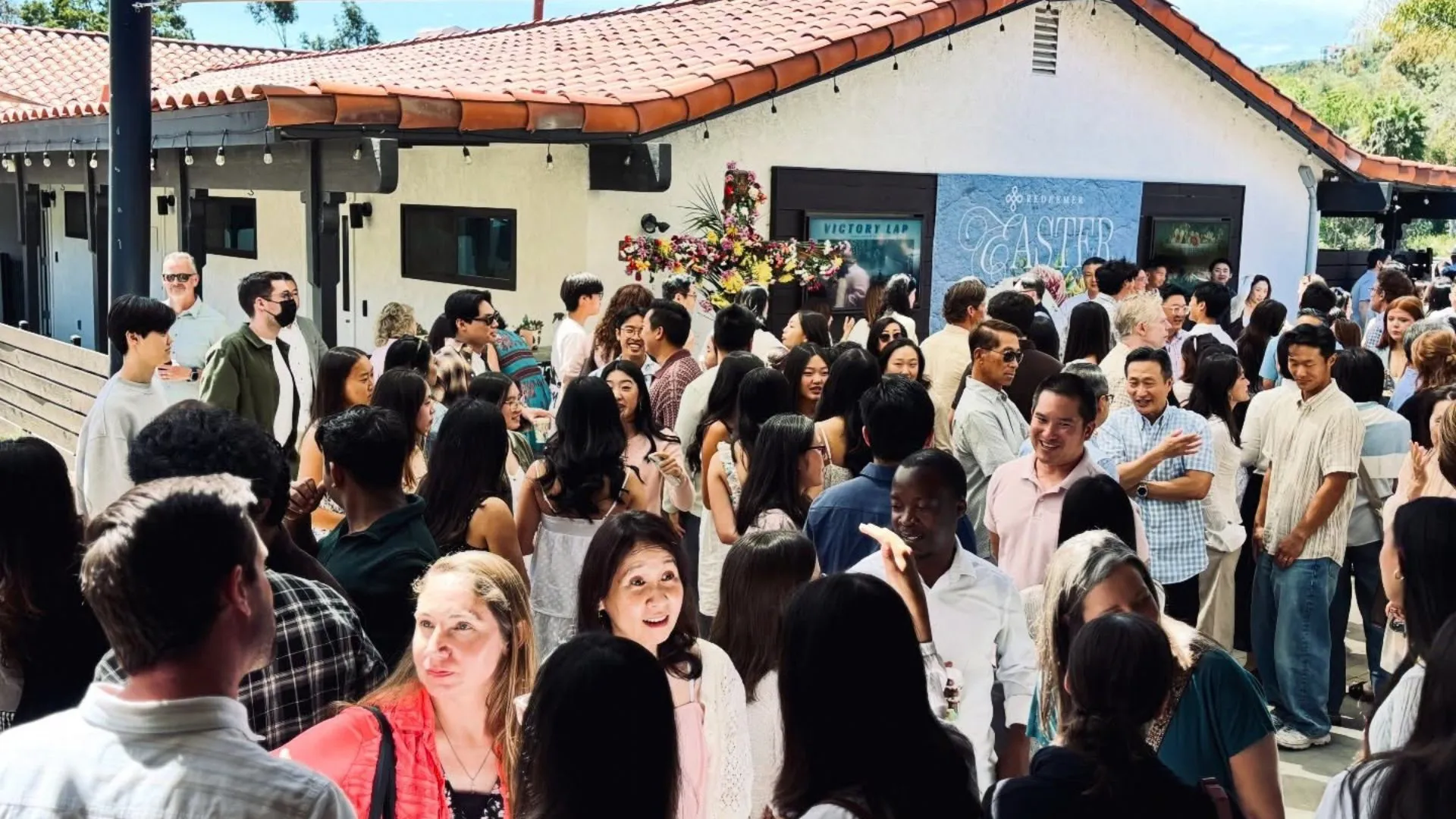
And what that means is an ambassador is someone who lives in one country but represents another. And I would say that's the Christian life, and that's our unique milieu, our environment here, where I say to our people, God has brought us to live in San Diego. We are to fully engage and be present in our city. We love our city. We work, we raise our kids, we go to school here, we enjoy the weather, the beach, the tacos, all of that, but we represent another kingdom.
And so that means we don't assimilate; we don't become like the culture because we represent the Lord's kingdom. So that means we're called to faithfully be present, but faithfully represent Christ. So that language of 'ambassador' is key. And what that also means then is an ambassador, if you think about it, doesn't just stay in the embassy all day.
The embassy is kind of the outpost of where you're in another country, and I would say the church is, our church is an outpost. And so we're called to be this outpost, and an ambassador who lives in the embassy all day and doesn't ever leave, is not an ambassador.
So what does it mean then for us to then engage our city if we are ambassadors for Christ? And I think what that means, one aspect of it is that church is not a hiding place from the world. We are an equipping place. We are a sending place into the world, discipleship and making disciples and living out as ambassadors. Lord, would you make our church to be like that?
People who are so passionately gripped by the gospel of grace and reconciliation, and as we experience that, we are entrusted, as you've entrusted us to this ministry, that we live it out in this way as ambassadors in our city on the West Coast.
I was trying to think of creative ways to ask this, but I'm just going to put it on a tee for you. What's it like being a pastor?
Yeah, it's a blessing and a burden, but all rooted in the gospel.
There's a tremendous blessing to be a pastor and to be entrusted with the ministry of God, to talk to people about Jesus and to shepherd the flock of God. What an incredible privilege. I'm so grateful for that blessing and to be part of God in his grace, to use the preaching and engagement to see lives changed by the work of His Holy Spirit. Wow.
When I get to share the gospel with someone, and I see people come into faith in Christ and I see the Holy Spirit transforming their lives, it just still moves me to tears. So I'm like, I get to be a part of this. Thank you, Jesus. So that's a blessing.
The burden, I would say the burden is feeling the weight of sheep that are hurting.
We're in a season right now where we know loved ones in our congregation — there's some hard stuff, cancer and broken marriages, and that weighs. And I think that burden is a challenge as well as the burden of living in a broken world.
So there's hurting sheep, the image of a shepherd and a flock and sheep, so there's hurting sheep, but there's also, sometimes, sheep bite back. I mean, I do that with the Lord, so that's hard too.
And then to know and remember again that your identity is found in Jesus and to be rooted in that. So I would say that's what it's like to be a pastor. And now, having done it for 25 years, so grateful for the privilege of being in one spot too.
I did not account for that. I didn't know that would be the case, but to journey with and to see myself, by the grace of God, the Holy Spirit, growing and maturing and deepening me and even our congregation, I would say that would be what it's like.
That frames this next question well. Barna Group, which puts out some great research, put out multiple rounds of research on the loneliness and the solitude felt by pastors. As of the most recent data, they did a study, I think it was in 2015, that found about 43% of pastors felt regular loneliness and solitude. And more recently, a couple of years ago, a study came out to revisit that question. It was about 65% of the pastors surveyed, and a quarter of those said they felt it frequently or daily.
Why do pastors feel lonely and sad in this specific way, why do so many of them feel this way, and how can the church serve them better to address that reality?
I think for pastors, when you shared all those statistics and things, I'm nodding my head saying, oh yeah, I can existentially understand that, talking to my own pastor friends and hearing that.
I think one of the unique things for me, as I guess I'm sharing about it too, is you're shepherding the people of God and it's your flock, and you love the people of God too, but is there a space where you can feel safe to share your own kind of stuff?
So, for instance, if I was talking to a pastor in a different setting and he's like, "What do I share if I'm like, I'm not sure if God's calling me to transition to a different church?" What do you do about that? It's really hard if it’s your congregation.
Or you think about what you do when we're going through some heavy stuff in our marriage? And of course, this is not saying that you're isolated. I'm not saying that at all, the church, but I think the unique part of churches that makes in general, so unique, beautiful, but challenging is for people in ministry, it's your personal, spiritual, missional, all in one; it's like a one-legged stool.
Maybe I could put it this way, and I read this in a leadership book. For others in a church setting, you could have a three-legged stool. So it's your family, your work, and your church. And if one of those feels wobbly, you can lean on the others and work that through.
But when you're in ministry and you're in the church, it's like everything is one, so then it feels really wobbly. And so part of that dynamic is who can you share that with in a way that you can feel like, "Is this a place for me that I could feel, if I could put it in this way, safe?" And again, I'm not saying this in an unhealthy way, but a safe person that can understand that story.
So I think that can be really lonely and hard. There's only one Savior, that's Jesus. And so pastors are people who are saved by grace, but what do you do with ministry hurts? What do you do with those griefs and those burdens? And when you're feeling that in a way that you go, Lord, where's a safe place?
I think in the wisdom of God, we need confidants, we need coaches, and we need counselors because those dynamics can — it's very felt in ministry. I think that's one of the reasons why I would say, pastors, you need friends, you need confidants, if I could put it that way, people who know you, who are in it just for you, not the ministry, but for you and how you are doing.
I also think you need mentors and people like that because we are people, and those are the grace and the people that God placed on us that we really need. I think pastors need, that's going to be significant.
How can those listening to this and reading this story pray for you specifically in your ministry and the larger ministry of Redeemer?
Thank you for asking that. So kind. Pray for me, my marriage, and my ministry, and in that order.
I remember reading a book on leadership, and it gave this imagery of a pitcher of water, which is the gospel, and it needs to pour into the cup, which is the life of the minister, pastor; then it must overflow into the saucer, which is your marriage, then into the tray, which is your ministry. And I share that for those listening: would you pray for me and for your pastors that it would go in that order?
Would you pray that I would be astonished by the gospel and overflow like pastors would, that we would overflow because if I'm honest, it's easy to become a professional pourer. You're pouring yourself out and not being poured in. And without that, you're going to try to be poured into something else.
It could be your family, it could be a hobby, and it could be a good thing, but the Bible will say that's an idol. And anything else that you find that's pouring that's not the gospel, it's going to be like drinking salt water. It'll make you more thirsty; it'll kill you. So I'd say pray for me that I would be astonished by the gospel, and then pray for my marriage.
It's really easy in marriage, as a pastor, that you do this as partners, that's all you talk about when you come together, that's all you talk about. And it's so easy to focus so much on serving others that the danger is you can neglect serving one another. And you're looking together at the ministry, but not at one another. And I think ministry has to start with being astonished by the gospel and together in your marriage health that then reflects into the ministry to pray from marriage.
And I have an amazing wife; she's a gospel coach, and we’re navigating this together, but it's mentors and friends that God has used to shape me to recognize that importance.
And then, in ministry, the danger of it is to put, if using that imagery, to put the tray above all and have the blessing beyond the ministry. And then you're going to overfocus on people and programs. When you focus on people, you care for the people, but you're going to burn out; you're going to feel the responsibility for programs. It's all about finding your identity and joy and things going well. Or if it doesn't go well, then you could burn out, or you're going to burn your staff out. So that would be a healthy place for just that particular order.
Okay, last one for you, and this is more of a fun one for me. In your bio on the Redeemer website, it says you're passionate about the gospel renewing everything. And considering your background a bit, and just as I was researching for this conversation, this quote came to my mind for no particular reason, I don't think, and there's a good chance you've read it yourself: a G.K. Chesterton quote, 20th-century English writer and apologist. But I want to read it to you, and then I want you to react with what it means to you, or just however you see fit — just how it hits you. This is G.K. Chesterton, for those who are not familiar with this quote, on his consideration of Christianity, written after he was saved.
"Christianity came in here as before. It came in startlingly with a sword and clove one thing from another. It divided the crime from the criminal; the criminal we must forgive unto 70 times seven. The crime we must not forgive at all. It was not enough that slaves who stole wine inspired partly anger and partly kindness. We must be much more angry with theft than before and yet much kinder to thieves than before. There was room for wrath and love to run wild. And the more I considered Christianity, the more I found that while it had established a rule and an order, the chief aim of that order was to give room for good things to run wild."
Wow. So you're asking for my response to that massive quote. I'm like, "Whoa."
I would say all those things that Chesterton shared, or what I'm just hearing for the first time, is so massive, and it can only make sense from a Christian lens of the gospel: how do you account for an utterly broken world where justice is needed, and how do you account for hope that we have and mercy?
And I think as I'm preaching through Jonah right now, that's what Jonah had to learn about: how do you make sense of God who is holy and righteous and so therefore, there's judgment, but a God who is also compassionate and cares and is showing mercy? And Jonah wanted discriminatory grace.
And I would say that I can fall into that too, but to understand the fullness of the gospel in that way of who God is both, not fifty-fifty, but completely, and to see it expressed in the person of Christ and the cross, that's where the explosion of life change happens.
Lord, that is the centerpiece that helps navigate through what I think Chesterton said that I'm trying to go, oh my gosh.
That's what initially comes to my mind, just hearing that from myself and the centrality of the gospel that can hold those tensions in of what it means about God and sin and justice and mercy and myself and to the world and the hope for the world.
Amen. Excellent answer. This has been such a wonderful conversation, Paul, and so glad we got to do it. We will be thinking of and praying for your ministry here at K-LOVE, and I know those listening to this will as well. Thank you so very much for sharing your time with us.
Ben, thank you so much too. I'm grateful for this opportunity. Thank you.